
Caroline Scott (Class of 2025, ACS Chemistry), traveled to Perform Summer Research at the University of Tokyo, an NSF-Sponsored International Collaboration

Sunghee Lee • August 21, 2023

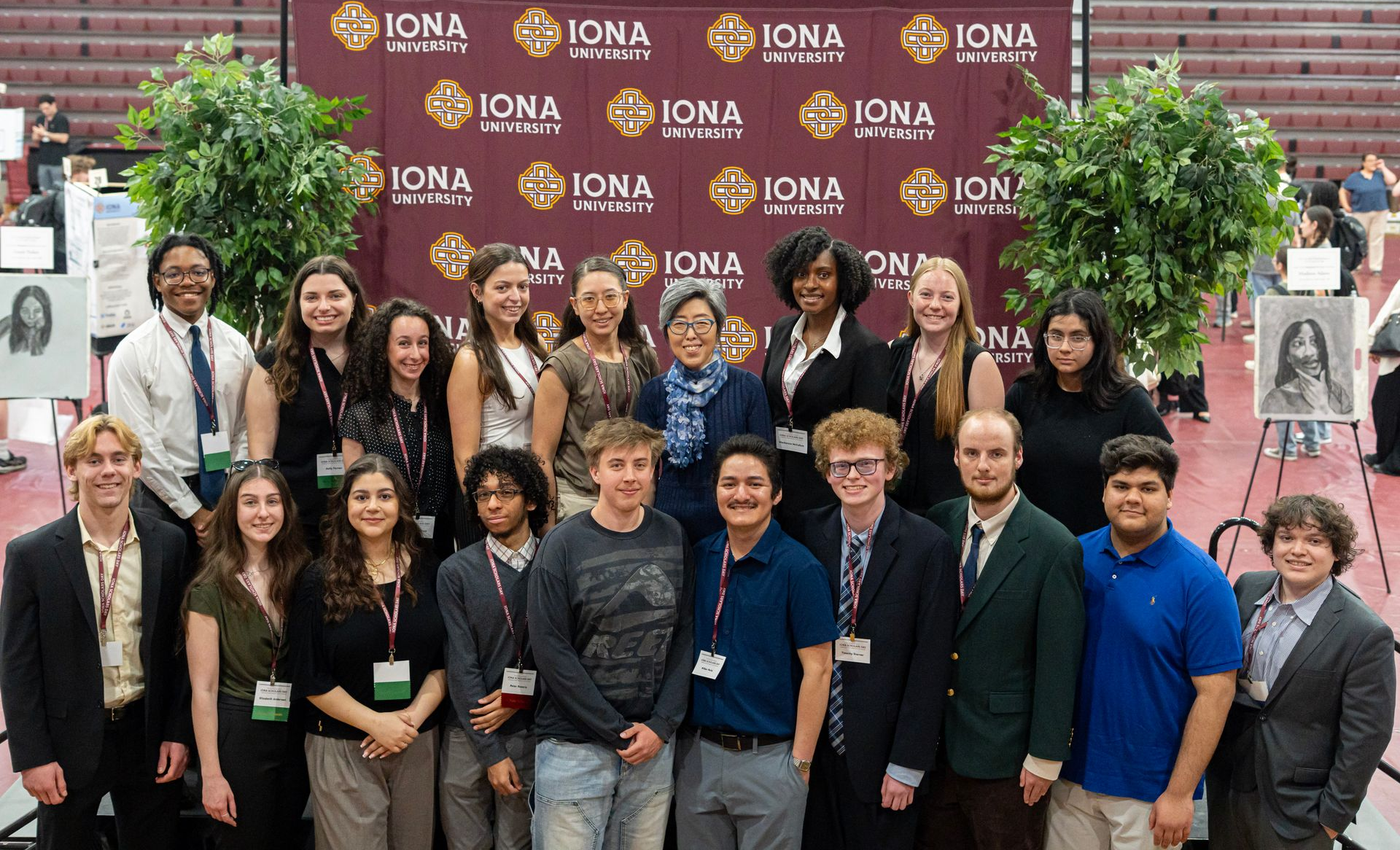
This summer, Caroline Scott (Class of 2025, ACS Chemistry) joined a globally renowed scientific team in Tokyo to perform research in the field of Biophysical Chemistry. This opportunity was enabled by the NSF Award to Dr. Sunghee Lee for international research collaboration with Professor Shoji Takeuchi of the University of Tokyo. In the past, five students from Dr. Lee’s research group have traveled to Japan for a month-long research project: Peter J. Milianta (Class of 2016, Biochemistry), Michael McGlone (Class of 2017, Physics), Jacqueline Denver (Class of 2017, Biochemistry), Alessandra Armetta (Class of 2018), and Joseph Giancaspro (Class of 2020). Dr. Lee noted, “This is a tremendous opportunity for our students to experience a true intellectual collaboration. Our research partners in Japan are very impressed by our students’ dedication and contribution. After three years of interruption, I am very happy to be able to send an Iona student to Japan again this summer. Caroline has been working diligently on the investigation of electrical property of model cell membranes and her summer experience provided an even greater level of confidence and strength towards her goal in advancing to a PhD program upon graduation from Iona.”

Caroline added “This summer I had the amazing opportunity to travel to Tokyo, Japan for 5 weeks to conduct electrophysiological measurement of a model cell membrane. This experience was incredible. Not only did I learn an immense amount of important research skills, but I also got to explore the country of Japan and learn about its culture and history. On the weekends, I even got to hike to the top of Mount Fuji! The most valuable part of my experience in Japan was how much science I learned including how to analyze data and display results in a way that can help organize ideas and discover problems that will lead the research in the right direction. I am extremely thankful to Dr. Osaki and Prof. Takeuchi for welcoming me and guiding me with every step, and Dr. Lee for giving this opportunity and for her continuous support. I will now get to put these skills to use for the rest of my own scientific career, as I aspire to advance to PhD program after Iona.”
By Sunghee Lee February 23, 2026
We’re pleased to announce our new collaborative publication, “Study of the Interaction Between Graphene Oxide and Cholesterol Using Different Artificial Membrane Models,” conducted in partnership with colleagues in Italy. This work investigates how graphene oxide—an emerging nanomaterial with biomedical promise—interacts with cholesterol within lipid membranes. By employing various artificial membrane systems, we examined how membrane composition and organization influence these interactions, revealing key insights into the physicochemical mechanisms at play. Our results contribute to a deeper understanding of how nanomaterials engage with biological membranes, providing valuable guidance for the safe and effective design of graphene-based biomedical applications. Congratulations to all team members and our Italian collaborators on this exciting achievement! The full article is available here: https://www.sciencedirect.com/science/article/pii/S0021979726002821 .
By Sunghee Lee February 23, 2026
In this study, we explored how the membrane environment shapes the behavior of serotonin, a key neurotransmitter involved in mood regulation and neural signaling. By systematically varying lipid composition in model membranes, we uncovered how differences in lipid charge, fluidity, and packing influence serotonin’s nonspecific interactions with bilayers. Our findings shed new light on the physical chemistry of neurotransmitter–membrane interactions, with potential implications for understanding serotonin’s diverse physiological functions and its role in receptor signaling. Congratulations to all co-authors for their outstanding work and collaboration! The article can be accessed here: https://pubs.acs.org/doi/full/10.1021/acsptsci.5c00767
By Sunghee Lee November 15, 2025
Our research team has uncovered new details about how small oil-like molecules influence the thickness and flexibility of cell membranes. These membranes, built from layers of lipids, contain tiny pockets of free space that help control how soft, dense, or permeable the membrane is. Our research team found that some smaller molecules can fit into these layers, making the membrane thicker, while larger or crystallizing ones get pushed out, leading to thinning. These changes help explain how different molecules inside a membrane affect its overall structure and function. This study not only expands our understanding of how biological membranes work but also points to new possibilities for creating custom-designed synthetic membranes for research and technology. Read more details here: https://pubs.acs.org/doi/10.1021/acs.jpcb.5c06296 Congratulations to the Project Symphpony team for their exciting findings and continued dedication to advancing membrane science!
Show More