
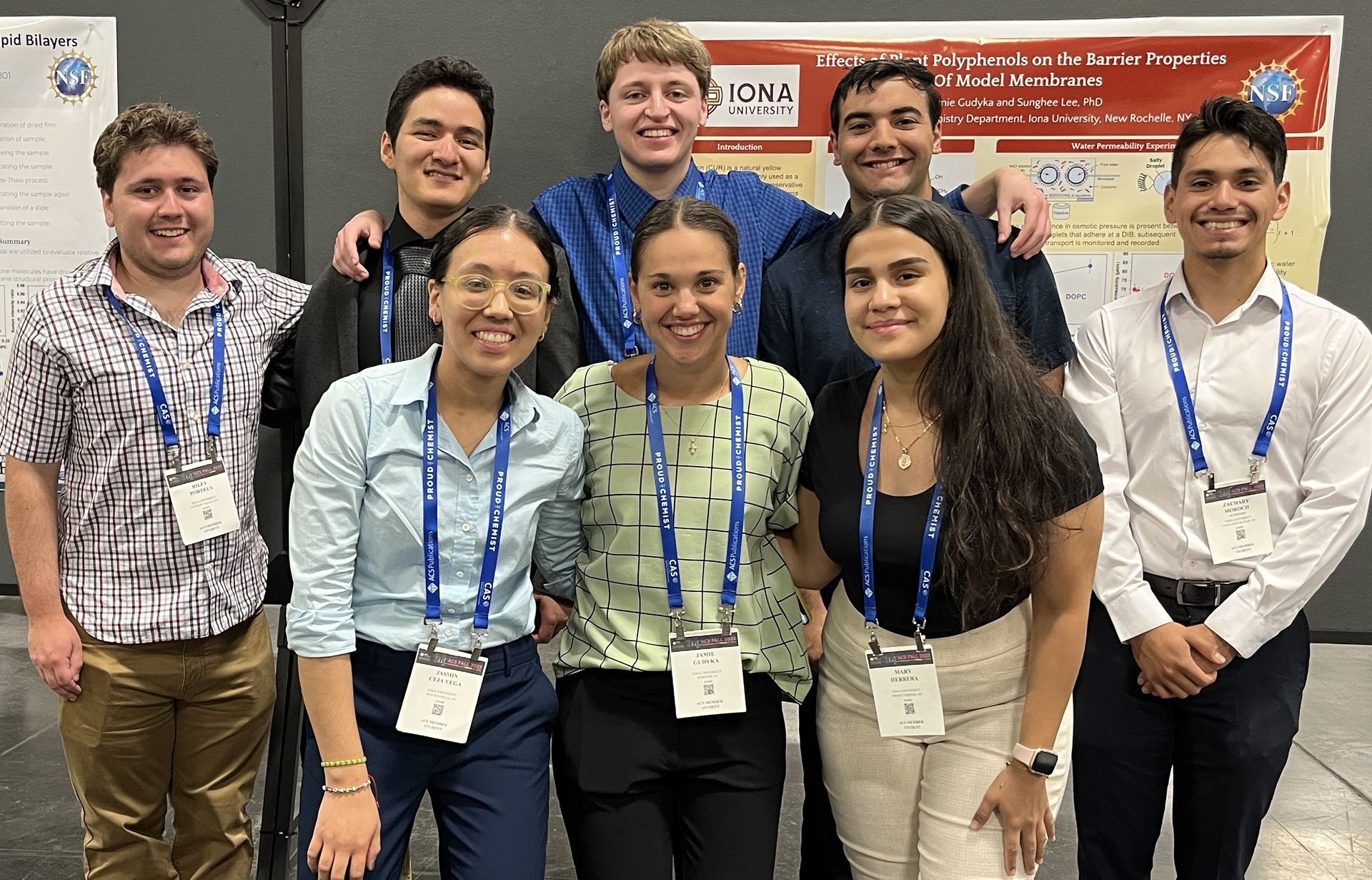
Iona Chemistry Research Team of Nine Students Presented at the ACS National Meeting in San Francisco, CA on August 12-17, 2023
Sunghee Lee • August 20, 2023

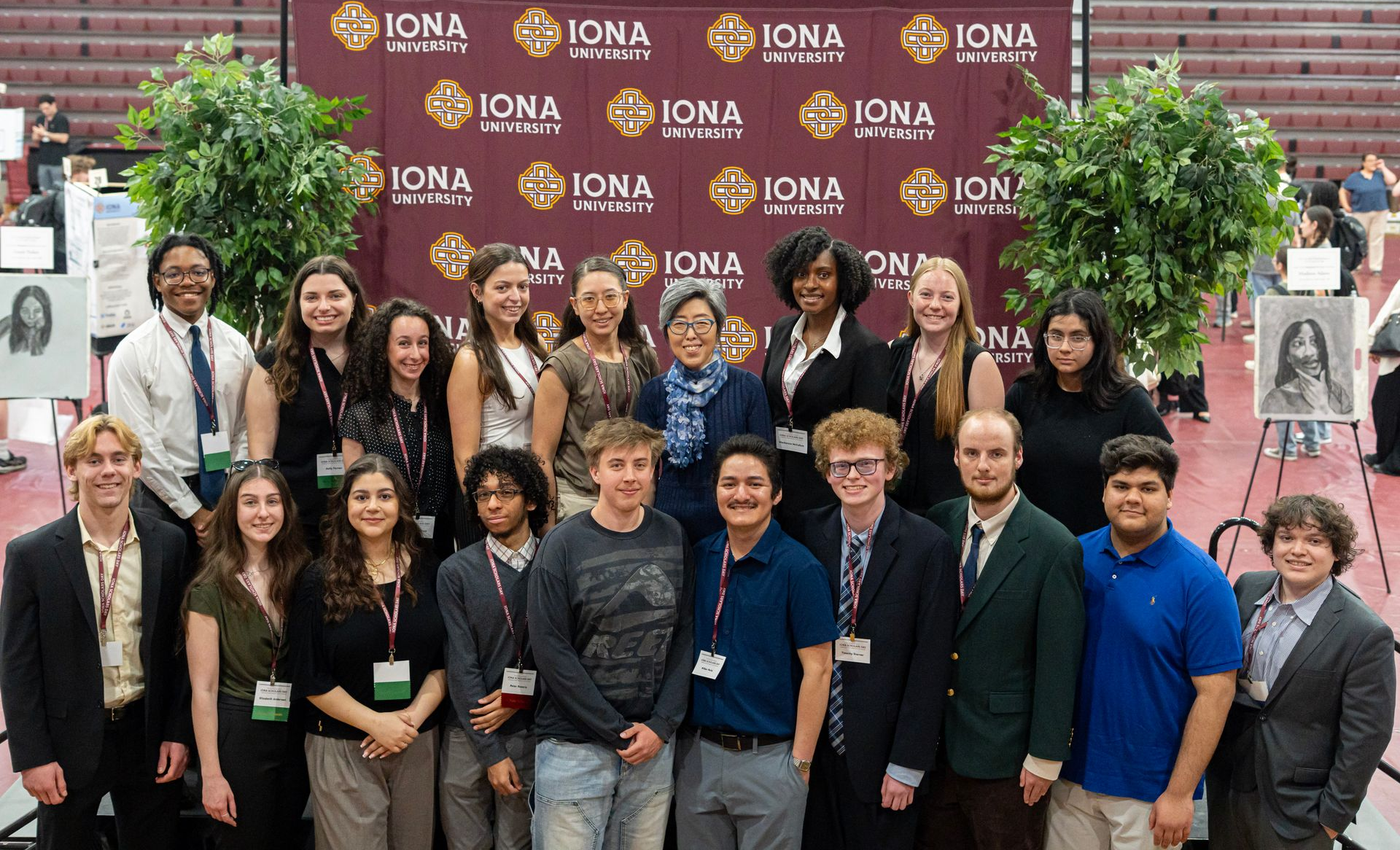
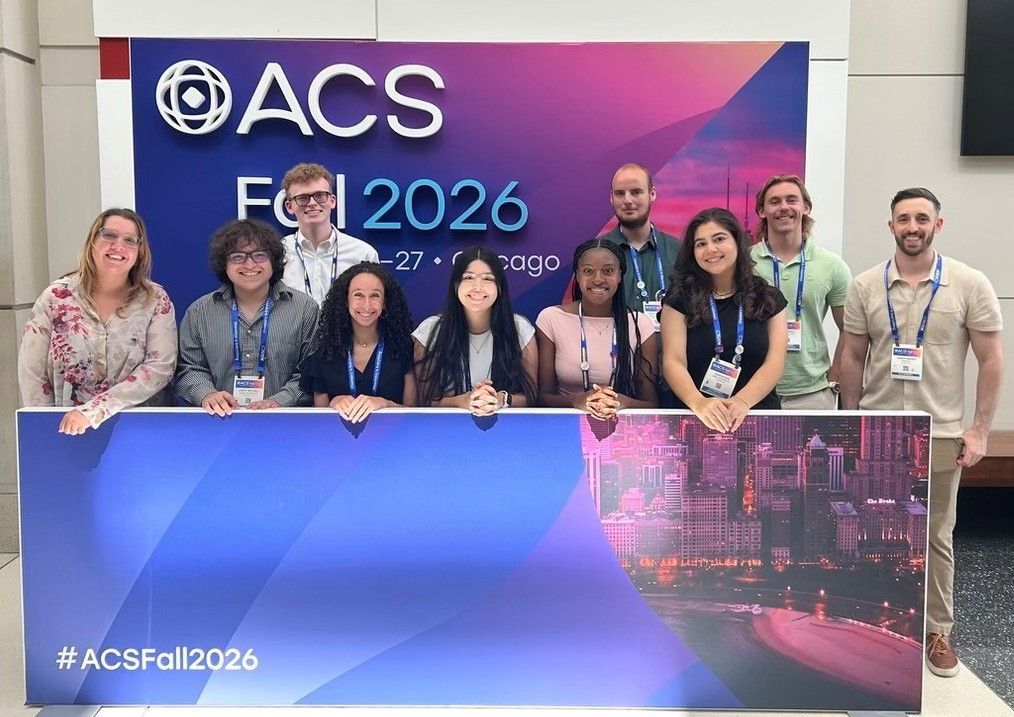
A research team of nine undergraduate students mentored by Dr. Sunghee Lee of the Chemistry & Biochemistry Department, have traveled to San Francisco, CA in August, to present their research findings at the National Meeting of the American Chemical Society (ACS). Joining with the international chemistry community, they presented six posters at the Division of Colloid and Surface Chemistry of ACS alongside PhDs and PostDocs from other institutions. Dr. Lee also delivered an oral presentation on the topic of biophysical membrane effects of bioactive molecules, while highlighting how her Iona team of undergraduates work together in harmony to achieve shared goals. Dr. Lee added “It is a proud moment for me to see our students confidently showcase their research findings, the fruit of countless hours spent in Cornelia Hall for multiple semesters and summers. Their exposure to the international network of scientists at this event will inspire them to pave their own scientific career paths and interests.” Jamie, a rising senior Biochemistry major added “Attending the American Chemical Society Fall 2023 conference in San Francisco, I got to experience other research going on in the different fields of chemistry. Additionally, I got to learn about research my peers are doing as well as graduate and PhD students. The information I took from this conference in addition to the connections I was able to make are is endless. It makes me excited for the future, and reinforced my desire to pursue an MD/PhD degree after graduating.” Chris, a rising junior Chemistry major added “ACS Fall 2023 at San Francisco was an incredible time. I truly appreciated learning about all the various research topics from chemists all across the globe. I really enjoyed speaking to whoever came up to me, as having an in-depth conversation about Raman Spectroscopy is not something I get to do often. I would like to thank Dr. Lee for the opportunity to attend, and all of Project Symphony for making this trip so enjoyable.”
By Sunghee Lee February 23, 2026
We’re pleased to announce our new collaborative publication, “Study of the Interaction Between Graphene Oxide and Cholesterol Using Different Artificial Membrane Models,” conducted in partnership with colleagues in Italy. This work investigates how graphene oxide—an emerging nanomaterial with biomedical promise—interacts with cholesterol within lipid membranes. By employing various artificial membrane systems, we examined how membrane composition and organization influence these interactions, revealing key insights into the physicochemical mechanisms at play. Our results contribute to a deeper understanding of how nanomaterials engage with biological membranes, providing valuable guidance for the safe and effective design of graphene-based biomedical applications. Congratulations to all team members and our Italian collaborators on this exciting achievement! The full article is available here: https://www.sciencedirect.com/science/article/pii/S0021979726002821 .
By Sunghee Lee February 23, 2026
In this study, we explored how the membrane environment shapes the behavior of serotonin, a key neurotransmitter involved in mood regulation and neural signaling. By systematically varying lipid composition in model membranes, we uncovered how differences in lipid charge, fluidity, and packing influence serotonin’s nonspecific interactions with bilayers. Our findings shed new light on the physical chemistry of neurotransmitter–membrane interactions, with potential implications for understanding serotonin’s diverse physiological functions and its role in receptor signaling. Congratulations to all co-authors for their outstanding work and collaboration! The article can be accessed here: https://pubs.acs.org/doi/full/10.1021/acsptsci.5c00767
By Sunghee Lee November 15, 2025
Our research team has uncovered new details about how small oil-like molecules influence the thickness and flexibility of cell membranes. These membranes, built from layers of lipids, contain tiny pockets of free space that help control how soft, dense, or permeable the membrane is. Our research team found that some smaller molecules can fit into these layers, making the membrane thicker, while larger or crystallizing ones get pushed out, leading to thinning. These changes help explain how different molecules inside a membrane affect its overall structure and function. This study not only expands our understanding of how biological membranes work but also points to new possibilities for creating custom-designed synthetic membranes for research and technology. Read more details here: https://pubs.acs.org/doi/10.1021/acs.jpcb.5c06296 Congratulations to the Project Symphpony team for their exciting findings and continued dedication to advancing membrane science!
Show More