
Exciting News: Dr. Lee Honored as an ACS Fellow for 2024!

August 9, 2024

We are thrilled to announce that Dr. Lee has been named one of the 37 ACS Fellows for 2024 by the American Chemical Society! This prestigious recognition celebrates Dr. Lee's remarkable contributions to the field of science and dedicated service to the ACS community.


Dr. Lee expressed gratitude, stating, "Being recognized as an ACS Fellow is a profound honor. This award acknowledges my work in biophysical chemistry and my commitment to mentoring nearly 100 undergraduate students. It's a testament to our shared success in integrating education with research excellence." 


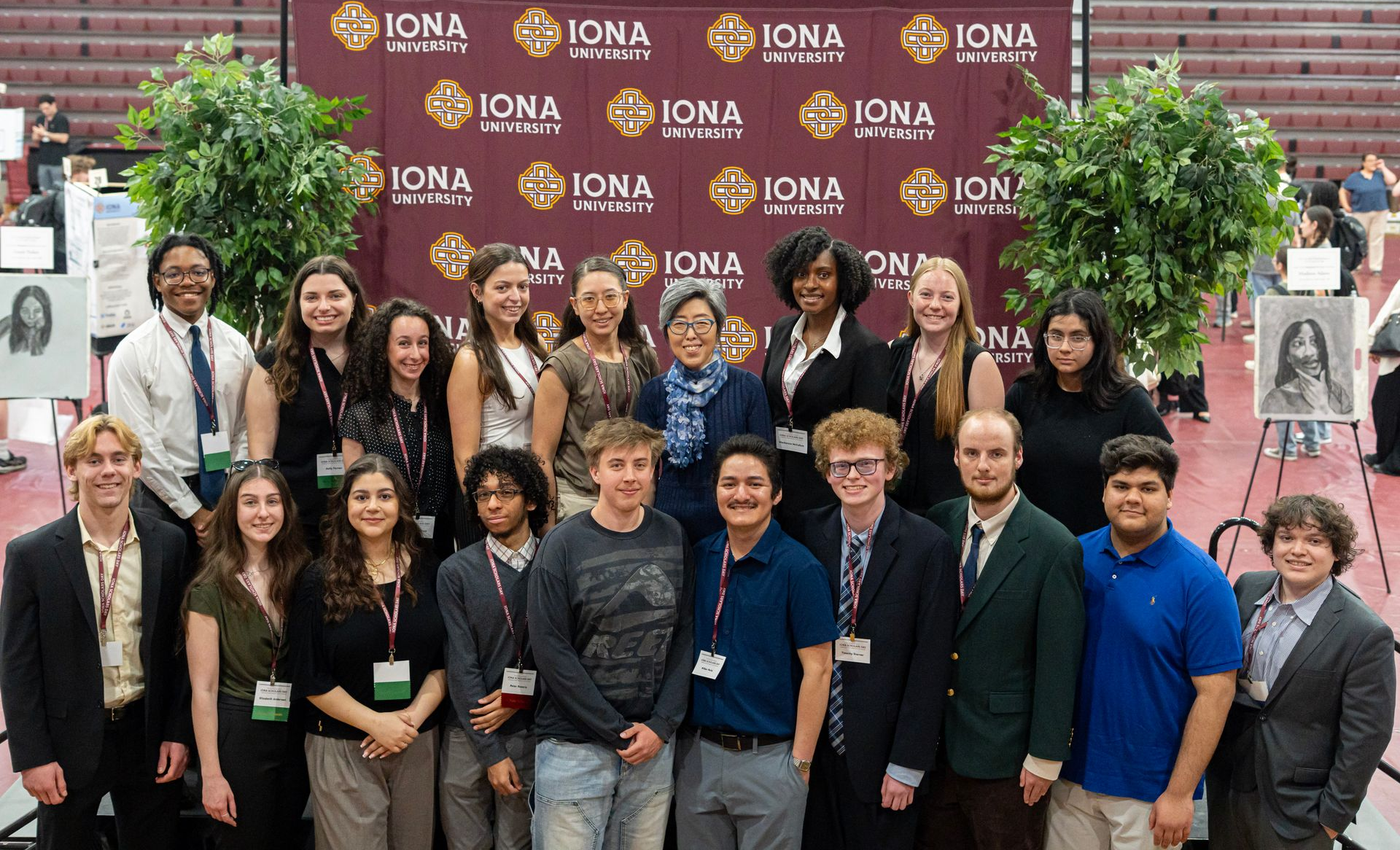
The special awards ceremony will take place at the ACS National Meeting in Denver, CO, on August 19th, 2024. Dr. Lee is eagerly looking forward to celebrating this milestone with 10 talented students from the research group, who will also be presenting their findings to an international audience. Their hard work and dedication have made this journey unforgettable!


Congratulations to Dr. Lee and the entire team for this incredible achievement. We can't wait to see the exciting discoveries that lie ahead!


-Project Symphony Team
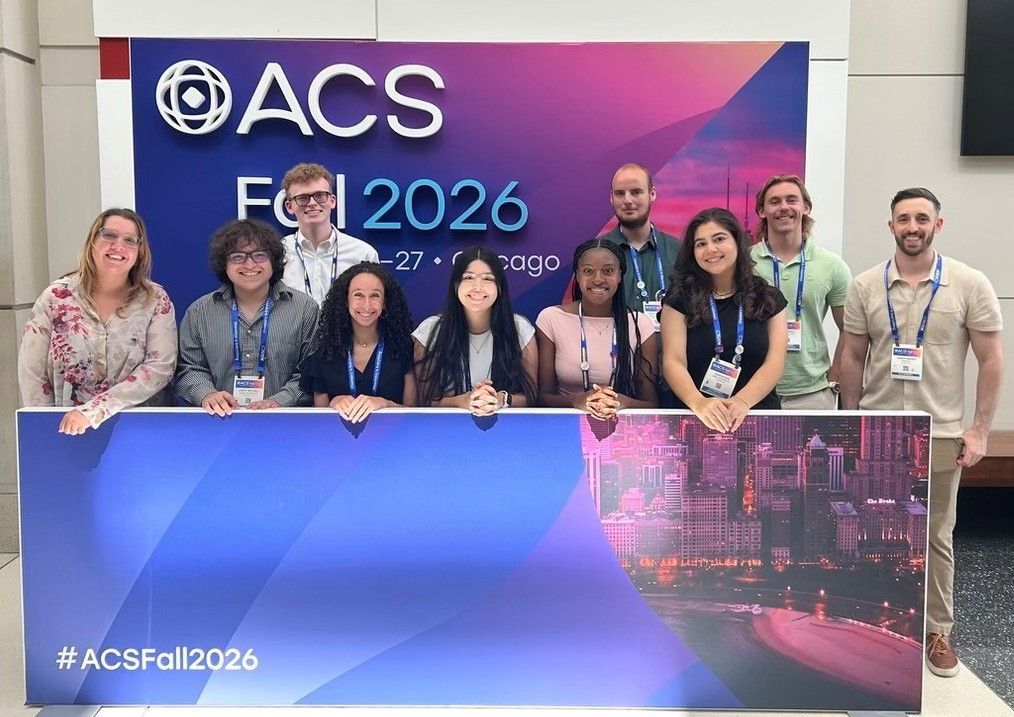
By Sunghee Lee March 27, 2026
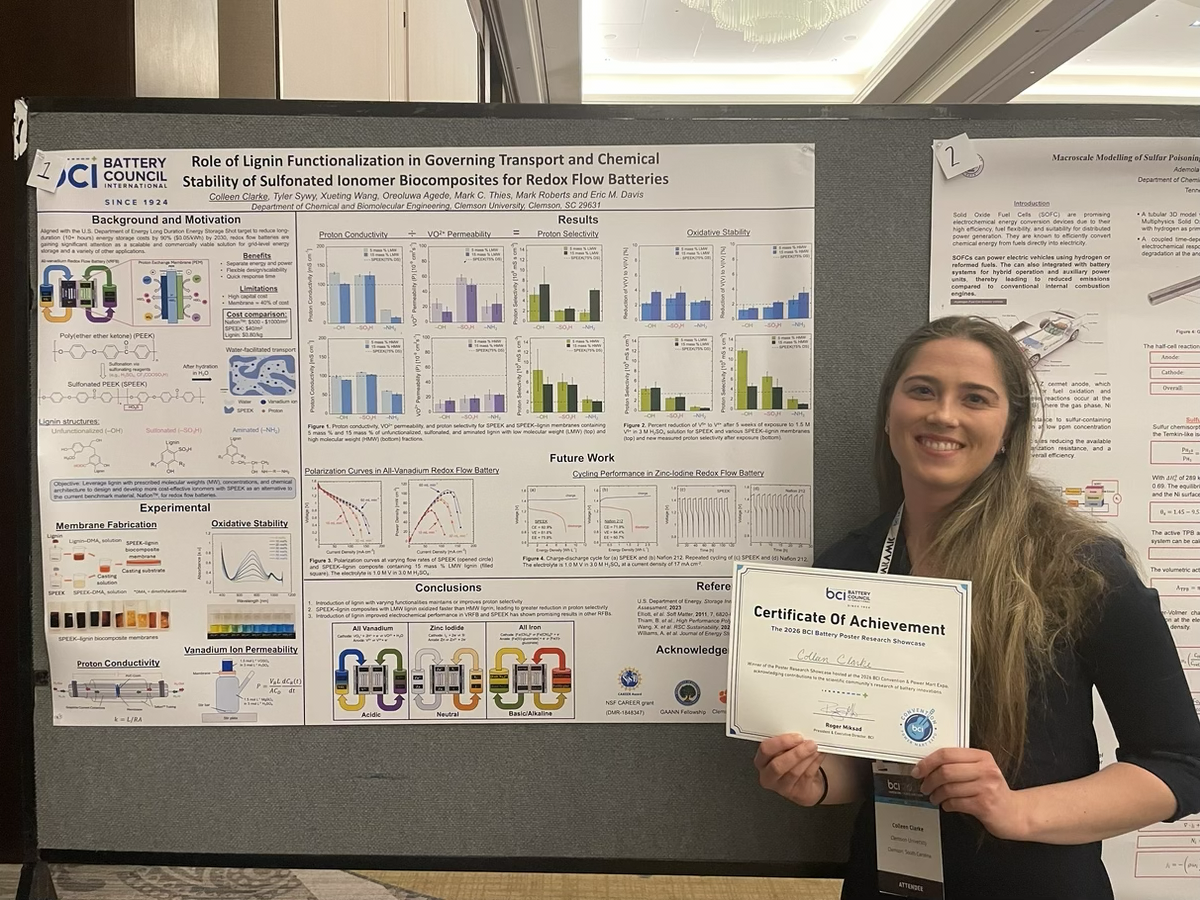
We are thrilled to celebrate two of our Project Symphony leaders, Lizzie and Jessica, who presented their research posters at the Spring 2026 ACS National Meeting in Atlanta, GA. They each shared our group’s culminated work on the impact of PFAS (“forever chemicals”) on mammalian and bacterial membranes in a session of the Division of Colloid and Surface Chemistry. Their posters were part of the Biomaterials and Biointerface symposium, which brings together research at the intersection of colloid and surface science and biology. The symposium highlights studies of biological interfaces, exactly where our work on PFAS–membrane interactions fits in, making it a perfect venue for showcasing what Project Symphony has been building toward over the past several years. Lizzie and Jessica presented the group’s work with professionalism, clarity, and confidence, representing Project Symphony to a truly global audience of scientists. As graduating seniors, this was their final undergraduate presentation, and they rose to the occasion. Much of what they shared has already appeared in two peer‑reviewed publications coauthored with other Project Symphony members, underscoring how sustained collaboration in our lab leads to publishable, impactful science. Adding to the celebration, former Project Symphony member Caroline, now a PhD student in chemistry at Georgia Tech University, joined them in Atlanta to cheer them on. Her support reflects one of the most meaningful parts of Project Symphony: a lasting tradition of alumni and current members helping one another grow, both scientifically and personally. For us, their success is more than just a conference highlight—it’s a powerful example of how we, as a group, work together to achieve what once felt unimaginable. From brainstorming experiments and troubleshooting instruments to interpreting complex data, Lizzie and Jessica’s posters reflected the collective effort of many current and past Project Symphony members. Kudos to every Project Symphony member for contributing to this milestone—and special congratulations to Lizzie and Jessica as they take their next professional steps fully prepared for whatever comes next.
By Sunghee Lee March 27, 2026
We’re excited to share some big news from our Project Symphony family! This spring, our own Jessica Said ’26, was selected as one of only six undergraduates from across the country to speak in the ACS Presidential Symposium, “The Next 150 Years of Undergraduate Research,” at the Spring 2026 ACS National Meeting in Atlanta, GA. She gave her invited talk on March 23, representing both Iona and Project Symphony on a national stage. Jessica has been part of Project Symphony since her freshman year, working long hours in the lab with fellow PS members. Her talk, “The Cellular Cost of Forever Chemicals,” looked at how PFAS (“forever chemicals”) can harm both mammalian and bacterial cell membranes. Using experiments carried out right here in the Project Symphony lab, she showed how these compounds can disrupt the structure and function of lipid bilayers, raising important questions for human health and environmental safety. Much of what she presented has already appeared in two peer‑reviewed publications coauthored with other Project Symphony members and Dr. Lee. Dr. Lee shared how meaningful this achievement is: “I am so very proud of her accomplishment. Her level of dedication in research far surpasses what is typically expected of an undergraduate student.” Dr. Lee also often reminds us that staying engaged in research over multiple semesters and summers is what helps Project Symphony students build resilience, patience, and real scientific rigor—skills that carry far beyond the lab. Being invited to speak in an ACS Presidential Symposium is a huge honor, and the undergraduate spots are extremely competitive. Jessica’s selection is a testament not only to her hard work, but also to what an all-undergraduate group can accomplish when we work together like a well-rehearsed ensemble. For all of us in Project Symphony, seeing one of our own step up to the microphone in Atlanta and share our collective work felt like hearing a solo emerge from the middle of a larger performance: one clear voice, supported by the whole group behind it. Stay tuned—there’s much more music to come from Project Symphony.
By Sunghee Lee February 23, 2026
We’re pleased to announce our new collaborative publication, “Study of the Interaction Between Graphene Oxide and Cholesterol Using Different Artificial Membrane Models,” conducted in partnership with colleagues in Italy. This work investigates how graphene oxide—an emerging nanomaterial with biomedical promise—interacts with cholesterol within lipid membranes. By employing various artificial membrane systems, we examined how membrane composition and organization influence these interactions, revealing key insights into the physicochemical mechanisms at play. Our results contribute to a deeper understanding of how nanomaterials engage with biological membranes, providing valuable guidance for the safe and effective design of graphene-based biomedical applications. Congratulations to all team members and our Italian collaborators on this exciting achievement! The full article is available here: https://www.sciencedirect.com/science/article/pii/S0021979726002821 .
Show More